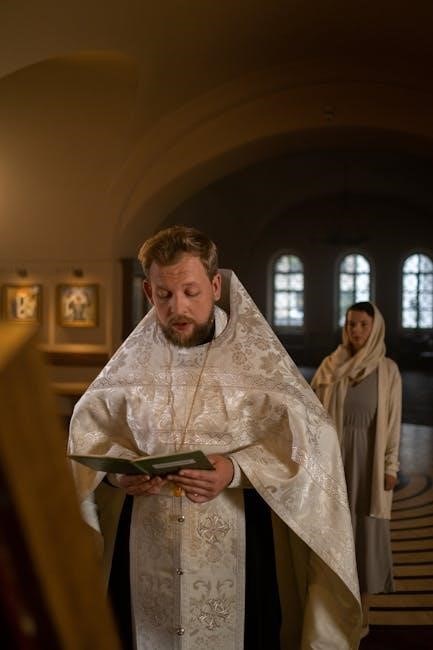
Prayers following Holy Communion represent a vital spiritual practice, offering a pathway to deepen one’s connection with God and reflect on the Eucharist’s grace.
These prayers, often found in PDF format for convenient access, are rooted in centuries of Christian tradition and devotion, fostering inner transformation.
The Significance of Post-Communion Prayer
Post-Communion prayer holds profound significance, extending the grace of the Eucharist into daily life. It’s a deliberate time to internalize the sacred encounter, moving beyond mere reception of the sacrament.
These prayers, readily available as a PDF resource, aren’t simply formalities; they are opportunities for adoration, thanksgiving, and petition. They allow believers to actively participate in the ongoing work of grace within their souls.
Through focused prayer, individuals seek forgiveness, spiritual nourishment, and the strength to live out the transformative power of Communion, embodying Christ’s love in the world.
Historical Context of Post-Communion Practices
The practice of prayers following Holy Communion dates back to the early Church, evolving through centuries of liturgical development. Early Christians often engaged in immediate thanksgiving and intercession after receiving the Eucharist.
Over time, formalized prayers emerged, documented in liturgical books and, more recently, compiled into accessible PDF resources. These traditions reflect a consistent desire to prolong the sacred moment and deepen communion with God.
Different traditions – Catholic, Orthodox, and Protestant – developed unique expressions, all rooted in the belief that Communion demands a continuing response of faith and devotion.
Understanding Holy Communion
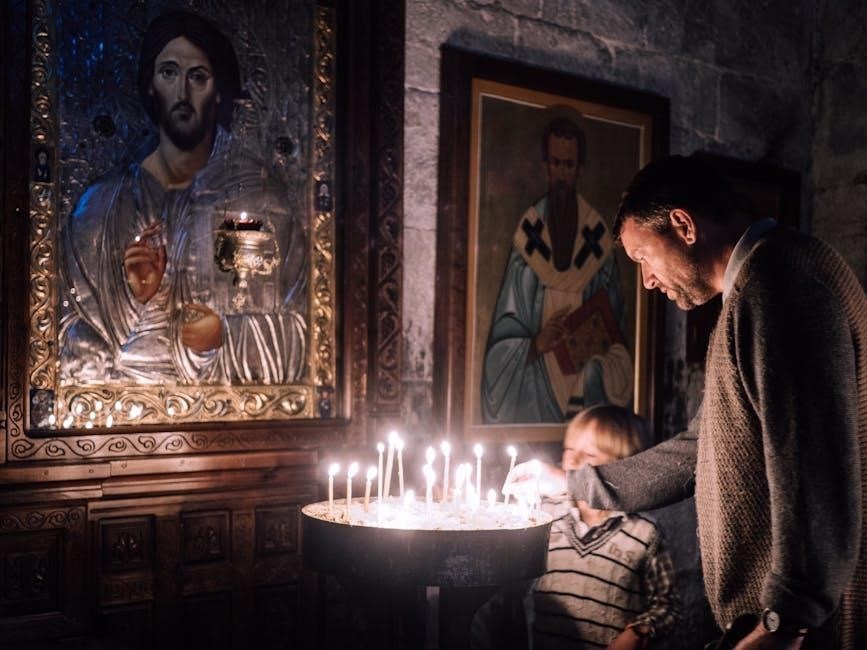
Holy Communion, the Eucharist, is a central sacrament uniting believers with Christ; prayers afterward, often found in PDF guides, deepen this sacred encounter.
The Eucharist as a Sacrament
The Eucharist stands as a foundational sacrament within Christianity, representing Christ’s real presence and offering grace to participants. Receiving Holy Communion isn’t merely a symbolic act, but a profound encounter with the divine, necessitating a period of reflective prayer afterward.
Many traditions provide specific post-Communion prayers, readily available as PDF resources, designed to prolong the spiritual benefits. These prayers aid in internalizing the sacrament’s meaning, seeking forgiveness, and fostering a deeper relationship with God, extending the grace beyond the altar.
The Real Presence of Christ
Belief in Christ’s genuine presence—whether transubstantiation, consubstantiation, or spiritual presence—underpins the reverence surrounding Holy Communion. This conviction fuels the need for heartfelt prayer following reception, acknowledging the sacredness of the encounter.
Post-Communion prayers, often accessible as downloadable PDF guides, express adoration and gratitude for this intimate union. They invite believers to dwell on the mystery, seeking to embody Christ’s love and grace in their daily lives, extending the sacramental experience beyond the moment of reception.
Communion in Different Christian Traditions (Catholic, Orthodox, Protestant)
While the core practice of Holy Communion unites Christians, traditions diverge in emphasis and liturgical expression, influencing post-Communion prayer. Catholic and Orthodox traditions often feature formalized, lengthy prayers, readily available in PDF prayer books.
Protestant denominations may prioritize personal reflection and spontaneous prayer. Regardless, the underlying desire—to deepen communion with Christ—remains constant, with resources like downloadable PDF guides aiding individual and communal devotion across these varied expressions.
Common Themes in Prayers After Holy Communion
Post-Communion prayers frequently express thanksgiving, seek forgiveness, and implore spiritual nourishment, often found compiled in accessible PDF prayer resources.
Thanksgiving and Adoration
Thanksgiving forms a cornerstone of prayers following Holy Communion, expressing gratitude for the gift of the Eucharist and Christ’s sacrifice. Many PDF prayer collections emphasize adoration, acknowledging God’s presence and majesty.
These prayers often include heartfelt expressions of praise, recognizing the divine encounter experienced during Communion. They reflect a desire to dwell in God’s love and acknowledge His holiness, readily available in downloadable PDF formats for personal devotion and spiritual enrichment.
Petition for Grace and Forgiveness
Post-Communion prayers frequently include petitions for God’s grace, seeking strength to live a life worthy of the Eucharist. Many PDF resources offer specific prayers requesting forgiveness for sins, both personal and communal.
These supplications acknowledge human weakness and dependence on divine mercy, readily available in downloadable PDFs. They express a desire for purification and a commitment to avoid future offenses, fostering spiritual growth and a deeper relationship with God.
Spiritual Nourishment and Growth
Prayers after Holy Communion often focus on receiving spiritual nourishment, recognizing the Eucharist as sustenance for the soul. Numerous PDF guides contain petitions for increased faith, hope, and love, seeking to embody Christ’s teachings.
These prayers aim to transform believers, enabling them to grow in virtue and witness to the Gospel. Downloadable PDFs provide resources for cultivating a deeper connection with God, fostering a life of holiness and service to others.

Specific Prayers and Their Origins
PDF resources showcase traditional Catholic, Orthodox, and Anglican post-Communion prayers, revealing their historical roots and theological significance within each tradition.
Traditional Catholic Prayers After Communion
Catholic prayers following Holy Communion, readily available in PDF prayer books, emphasize adoration and thanksgiving for the received Eucharist. Common examples include “Anima Christi” – a heartfelt plea for Christ to dwell within – and prayers focusing on the Body and Blood of Christ.
These petitions ask that the Communion not be to judgment, but for pardon and salvation. Many PDF guides also include prayers to the Blessed Virgin Mary and the saints, seeking their intercession. The intention is to maintain a state of grace and deepen spiritual union with God after receiving the sacrament.
Orthodox Prayers Following Holy Communion
Orthodox tradition views Holy Communion as the central sacrament, uniting believers with Christ. Post-Communion prayers, often compiled in PDF format, express profound gratitude for this mystical union and seek preservation of its grace. These prayers frequently include thanksgiving canons and petitions for forgiveness.
A key element is acknowledging Christ’s presence and asking for the remission of sins. Many PDF resources also feature prayers to the Theotokos (Mother of God) and saints, requesting their intercession. The goal is spiritual purification and continued communion with God.
Anglican/Episcopal Post-Communion Prayers
Anglican and Episcopal traditions emphasize a structured approach to post-Communion devotion, often utilizing a collect—a short, focused prayer—immediately following the sacrament. Numerous prayer books, readily available as PDF downloads, contain these collects alongside additional prayers of thanksgiving and intercession.
These prayers typically ask God to strengthen faith, grant peace, and empower believers to live out the Eucharist in daily life. PDF resources often include prayers for specific needs, reflecting a broad pastoral concern within the tradition.

Key Elements of Effective Post-Communion Prayer
Effective post-Communion prayer, often accessed via PDF guides, centers on faith, hope, and love—a heartfelt response to receiving Christ’s Body and Blood.
Act of Faith
An Act of Faith following Holy Communion, readily available in prayer PDF resources, affirms belief in God’s real presence within the Eucharist and His unwavering love.
This isn’t merely intellectual assent, but a profound trust in the divine promises fulfilled through the sacrament; acknowledging Jesus’s presence, truly God and truly man.
It’s a humble recognition of God’s power and goodness, a surrender to His will, and a confident reliance on His grace to transform our lives after receiving Communion.
Act of Hope
An Act of Hope, often included in prayer collections as a PDF, expresses confident expectation in God’s promises—eternal life, forgiveness, and ultimate fulfillment through Holy Communion.
It’s a firm belief that God will faithfully provide for our needs, guide us through trials, and ultimately bring us to salvation, strengthened by the Eucharist’s grace.
This hope isn’t passive; it actively inspires us to persevere in faith, love, and good works, trusting in God’s loving plan for our lives after receiving Christ’s Body and Blood.
Act of Love
An Act of Love, frequently found within prayers after Holy Communion in PDF format, is a heartfelt response to God’s immense love demonstrated through the Eucharist.
It’s a conscious decision to reciprocate that love, offering our whole selves—thoughts, words, actions—as a living sacrifice pleasing to Him, mirroring Christ’s self-giving.
This act isn’t merely emotional; it’s a commitment to live a life of charity, compassion, and selfless service, fueled by the grace received in the sacred meal.
Prayers for Specific Intentions
PDF resources often include focused prayers after Communion—for healing, the departed, or personal challenges—channeling Eucharistic grace towards specific needs.
Prayers for the Sick
PDF collections of post-Communion prayers frequently dedicate sections to intercession for those suffering illness. These prayers ask for God’s healing touch, invoking the power of the Eucharist to bring comfort and restoration.
They often express faith in Christ’s compassionate nature, requesting strength for the sick and their caregivers. Many prayers specifically ask for relief from pain and a return to health, aligning with the belief that Communion offers spiritual and potentially physical renewal.
Such petitions demonstrate a profound connection between receiving the Body and Blood of Christ and extending that grace to others in need.
Prayers for the Deceased
PDF resources containing post-Communion prayers often include supplications for those who have departed this life. These prayers acknowledge the belief in a continued spiritual existence and seek God’s mercy and peace for the souls of the deceased.
They frequently ask for the faithful departed to be granted eternal rest and entry into Heaven, recognizing the Eucharist as a source of hope for all, living and dead.
These petitions reflect a profound sense of communion with those beyond the veil, offering comfort and expressing faith in God’s loving embrace.
Prayers for Personal Struggles
Many PDF guides featuring post-Communion prayers dedicate sections to addressing personal difficulties. These petitions acknowledge human weakness and seek divine assistance in overcoming challenges like sin, temptation, and suffering.
They often request strength, guidance, and forgiveness, recognizing the Eucharist as a source of healing and renewal.
These heartfelt prayers express a desire for spiritual growth and a deeper reliance on God’s grace amidst life’s inevitable trials, fostering hope and resilience.

Finding Prayer Resources (PDFs and Online)
Numerous PDFs and websites offer collections of post-Communion prayers, providing accessible spiritual nourishment and deepening Eucharistic devotion for all believers.
Catholic Prayer Books with Post-Communion Prayers
Catholic prayer books frequently include a dedicated section for prayers to be recited immediately after receiving Holy Communion. Many traditional missals and devotional guides offer a variety of options, often in PDF format for easy download and personal use.
Resources like the Roman Missal and various compilations of daily prayers contain established post-Communion prayers, emphasizing thanksgiving, adoration, and petitions for grace. These PDF resources often feature prayers like “Anima Christi” and others focused on spiritual nourishment, readily available online from reputable Catholic publishers and diocesan websites.
Orthodox Resources for Communion Prayers
Orthodox Christians place significant emphasis on the prayers following Holy Communion, viewing this time as crucial for integrating the received grace into daily life. Numerous resources, often available as PDF downloads, compile these essential prayers.
These collections typically include the Thanksgiving Canon of St. Basil, prayers of repentance, and petitions for the intercession of the Theotokos and saints. Many Orthodox parishes and monasteries offer downloadable PDF prayer books containing these prayers, facilitating personal devotion and spiritual growth after partaking of Christ’s Body and Blood.
Online Databases of Prayers
Several online databases provide extensive collections of prayers, including those specifically designed for recitation after Holy Communion, often accessible as PDF documents. Websites dedicated to Christian spirituality and liturgical resources frequently host these compilations.
These databases allow users to search for prayers based on tradition (Catholic, Orthodox, Protestant) or specific intentions. Many offer downloadable PDF versions for offline use, enabling convenient access during personal prayer time and fostering a deeper connection with the sacrament.

The Role of the Guardian Angel in Post-Communion Prayer
Prayers often invoke angelic intercession, seeking a Guardian Angel’s guidance to lead one closer to God after receiving Holy Communion, as found in PDFs.
Invoking Angelic Intercession
Prayers after Holy Communion frequently include a heartfelt appeal to one’s Guardian Angel, recognizing their role as divinely appointed guides and protectors on our spiritual journey. Many PDF resources dedicated to post-communion devotion offer specific invocations.
These petitions ask the Angel to present our gratitude and intentions to God, to help us remain mindful of the Eucharist’s grace, and to shield us from temptation. The belief is that angelic assistance enhances the efficacy of our prayers, deepening our communion with the divine.
The Angel as a Guide to God
The Guardian Angel, invoked in post-Communion prayers – often accessible via PDF guides – isn’t merely a messenger, but a direct pathway to experiencing God’s presence. These prayers ask the Angel to lead us to the “altar of God,” symbolizing a deeper spiritual connection.
This guidance helps us internalize the grace received in the Eucharist, transforming it into virtuous living. The Angel assists in discerning God’s will and navigating the challenges of daily life, fostering a continuous state of prayerful awareness.
Praying for Others After Receiving Communion
Prayers after Holy Communion, readily available in PDF resources, extend beyond personal needs to encompass intercessory petitions for the Church and the wider world.
Intercessory Prayer and its Importance
Intercessory prayer, a cornerstone of Christian life, gains profound significance following Holy Communion, often guided by readily accessible PDF prayer guides. Receiving Christ’s Body and Blood empowers believers to pray effectively for others, mirroring Christ’s selfless love.
This practice isn’t merely a pious act; it’s a vital expression of unity within the Church and a powerful means of seeking God’s grace for those in need. PDF resources often provide specific intercessions for the sick, the deceased, and those facing personal struggles, fostering a compassionate and outward-focused spirituality.
Praying for the Church and the World
Following Holy Communion, fueled by the grace received, extending prayers beyond personal needs to encompass the entire Church and the world is crucial. Many PDF prayer resources specifically include intercessions for these broader concerns, guiding focused supplication.
Pray for Church leaders, unity among Christians, and the spread of the Gospel. Simultaneously, lift up global issues – peace, justice, and the alleviation of suffering. Utilizing PDF guides ensures comprehensive coverage, fostering a truly universal and compassionate prayer life.
Avoiding Common Pitfalls in Post-Communion Prayer
PDF guides can help combat distraction and superficiality in post-Communion prayer, encouraging focused devotion and preventing routine responses to God’s grace.
Distraction and Lack of Focus
Distraction frequently hinders effective post-Communion prayer; the mind wanders, revisiting daily concerns instead of dwelling on the sacredness of the moment. Utilizing a structured prayer guide, often available as a PDF, can significantly mitigate this issue.
These resources provide a focused sequence of petitions and reflections, gently guiding attention back to God.
Employing techniques like mindful breathing or reciting established prayers from a PDF can anchor the spirit, fostering deeper concentration and a more meaningful encounter with the divine.
Superficiality and Routine
Superficiality in post-Communion prayer arises when it becomes a mere recitation of words, devoid of heartfelt engagement. Relying solely on rote memorization, even with a prayer PDF, can lead to a spiritually empty experience.
Combatting this requires intentionality – actively meditating on the meaning of each petition and allowing the Eucharist’s grace to permeate one’s being.
Varying the prayers used, perhaps exploring different options within a PDF collection, can revitalize the practice and prevent stagnation.
The Connection Between Holy Communion and Daily Life
Holy Communion profoundly impacts daily living; post-Communion prayers, often accessed via PDF, help integrate this grace into everyday actions and interactions.
Living Out the Eucharist
Living out the Eucharist extends far beyond the altar, demanding a conscious effort to embody Christ’s love and compassion in all aspects of life. Post-Communion prayers, readily available as a PDF resource, serve as a crucial bridge, transitioning the sacred experience into daily practice.
These prayers aren’t merely concluding rites, but rather fuel for transformative action; They inspire us to address injustices, offer forgiveness, and actively seek opportunities to serve others, mirroring Christ’s selflessness. Utilizing a PDF allows for consistent, personal reflection, reinforcing the Eucharist’s enduring impact.
Transformative Power of Communion
The Eucharist possesses an inherent transformative power, reshaping believers from within and drawing them closer to divine grace. Post-Communion prayers, often accessed conveniently as a PDF, amplify this effect, solidifying the spiritual encounter.
These prayers facilitate a deeper internalization of Christ’s presence, fostering humility, gratitude, and a renewed commitment to living a virtuous life. A readily available PDF encourages consistent practice, allowing the Eucharist’s grace to permeate daily actions and cultivate lasting spiritual growth.

Resources for Further Study
PDF guides and theological texts illuminate prayer after Holy Communion, deepening understanding of the Eucharist and its spiritual benefits for believers.
Books on Eucharistic Theology
Delving into Eucharistic theology provides a robust framework for understanding the profound significance of Holy Communion and, consequently, enriching post-communion prayer. Books like “The Eucharist: Sacrament of the Presence of Christ” by Aidan Nichols explore the historical and theological underpinnings of this central sacrament.
Additionally, works by authors such as Pope John Paul II, offering insights into the spiritual life, can illuminate the practice of prayer following communion, often available as downloadable PDF resources. These texts help contextualize the prayers and deepen personal devotion.
Websites Dedicated to Prayer and Spirituality
Numerous online platforms offer a wealth of resources for deepening one’s prayer life, including collections of post-communion prayers often available as free PDF downloads. Websites like EWTN and Ignatius Spiritualty provide curated selections of traditional and contemporary prayers.
Additionally, sites dedicated to specific Christian denominations, such as the Orthodox Church in America, host liturgical resources and prayers for use after receiving Holy Communion, enhancing spiritual practice.

Downloading and Using Prayer After Holy Communion PDFs
PDF resources offer convenient access to post-communion prayers for personal or communal use, enabling focused devotion and spiritual enrichment after Holy Communion.
Finding Reliable PDF Sources
Locating trustworthy PDF sources for post-communion prayers requires discernment. Reputable Catholic prayer book publishers often provide downloadable content, ensuring theological accuracy and liturgical appropriateness.
Explore diocesan websites and established online Catholic resources; these frequently offer curated collections of prayers in PDF format. Be cautious of unverified sources, prioritizing those affiliated with recognized religious institutions.
Always check for proper imprints and author attributions to confirm authenticity. Downloading from secure websites (HTTPS) protects against malware and ensures data privacy when accessing these valuable spiritual aids.
Printing and Personalizing Prayer Materials
Once you’ve downloaded prayer PDFs, printing allows for a tactile and focused prayer experience. Choose a comfortable font size and paper quality for ease of reading during quiet reflection after Holy Communion.
Consider binding the pages into a small booklet for durability and portability. Personalize your materials by adding handwritten notes, underlining favorite passages, or including relevant scripture verses.
This customization fosters a deeper connection with the prayers, transforming them from mere words into a cherished tool for spiritual growth and ongoing communion with God.
The Future of Post-Communion Prayer
Digital PDF resources will likely expand, offering interactive prayers and personalized devotionals, while traditional printed forms maintain their enduring spiritual value.
Adapting to Modern Needs
Post-Communion prayer must evolve to resonate with contemporary life, acknowledging the fast pace and digital immersion of today’s world. Accessible PDF versions of traditional prayers offer convenience, while apps and online platforms can provide guided meditations and reminders.
Short, focused prayers suitable for busy schedules are crucial, alongside resources catering to diverse learning styles – audio recordings, visual aids, and interactive formats. The goal is to make this sacred practice readily available and deeply meaningful for all, fostering a continuous connection with the Eucharist beyond the immediate reception of Holy Communion.
The Enduring Value of Tradition
Despite modern adaptations, the core essence of traditional post-Communion prayers remains profoundly valuable. These time-tested formulations, often available as PDF downloads, articulate centuries of faith and theological reflection, offering a rich spiritual heritage.
They provide a structured framework for gratitude, repentance, and petition, grounding individuals in the sacramental mystery. Preserving these traditional prayers, alongside innovative approaches, ensures a balanced and holistic spiritual practice, honoring both the wisdom of the past and the needs of the present.